
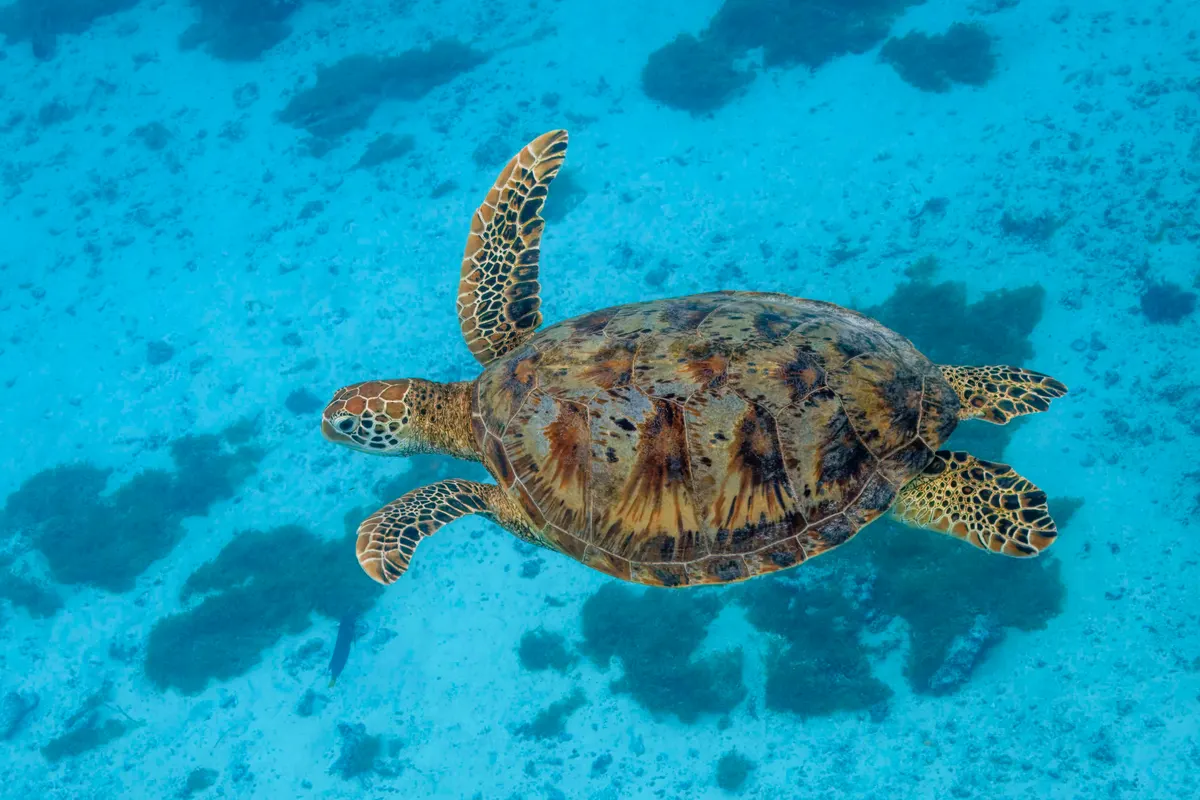





Four herbivores profiled here graze seagrass or algae in the sea. The green sea turtle is listed with ocean animals; the other three live near shore and are listed with coastal animals.
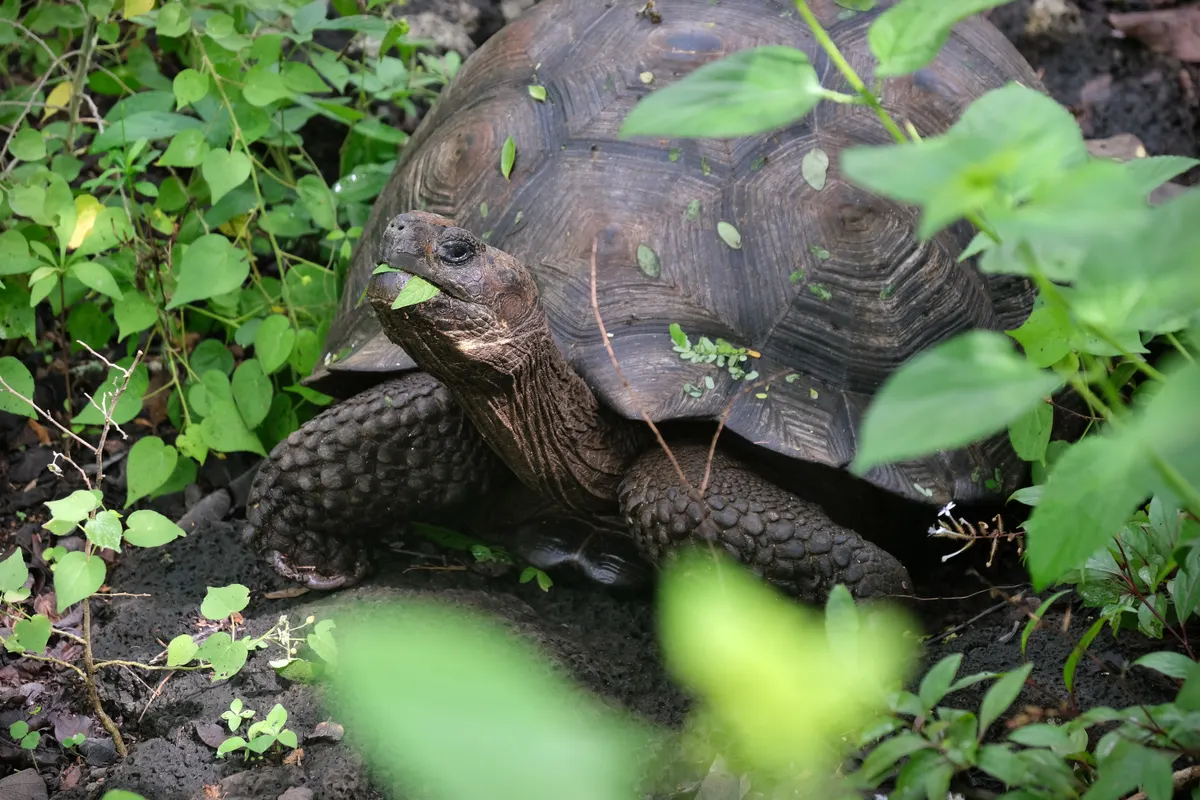
- Green sea turtle: NOAA describes it as the only herbivorous species of sea turtle; its diet consists mainly of algae and seagrasses. Young turtles in the open ocean eat both plant and animal life from drifting communities, then move to shallow coastal feeding grounds.
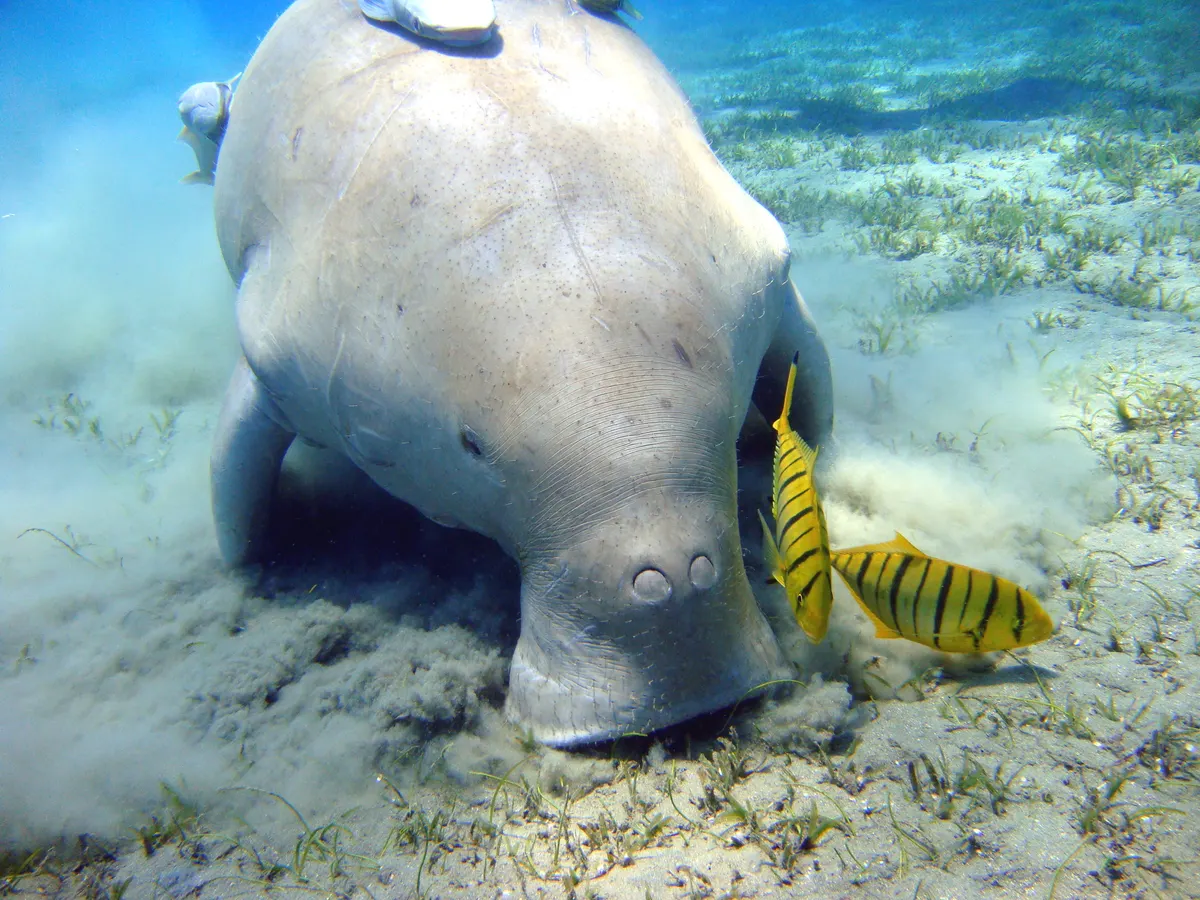
- Dugong: a marine mammal of shallow tropical water from East Africa to Vanuatu. It rips up whole seagrass plants with a flexible upper lip, leaving furrows in the seagrass bed, and eats marine algae when seagrass is scarce.
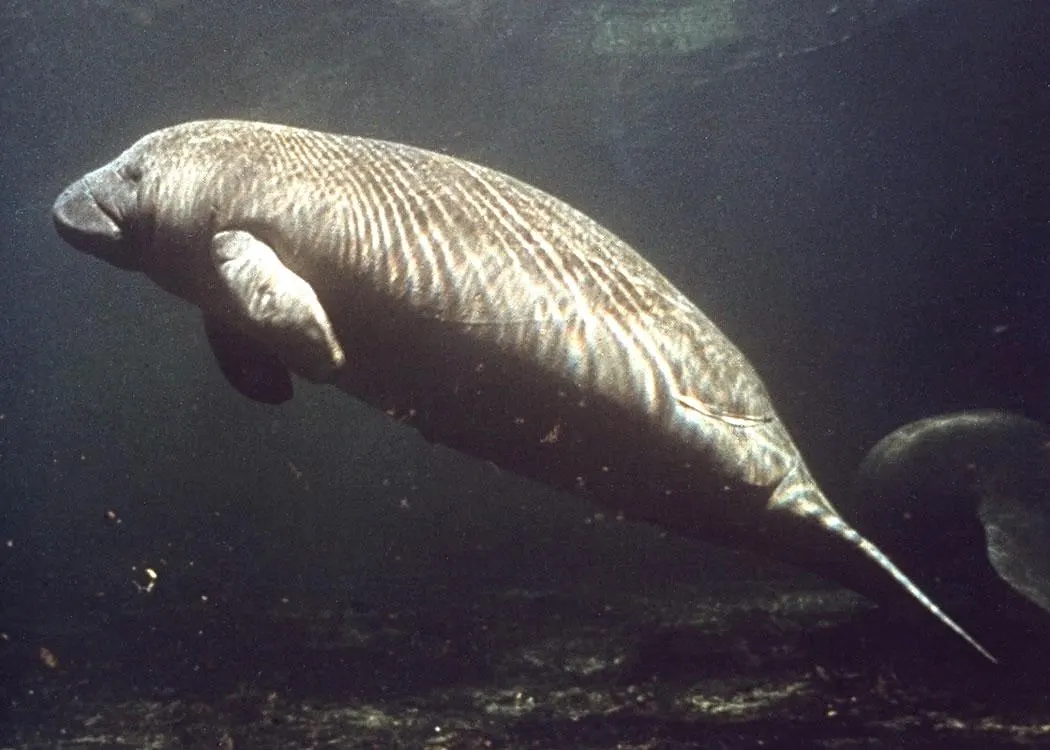
- West Indian manatee: spends up to 8 hours a day eating seagrass and other aquatic plants. It lives in marine, brackish and fresh water, so it also feeds in marshes and rivers. The dugong vs manatee comparison covers the differences between the two.
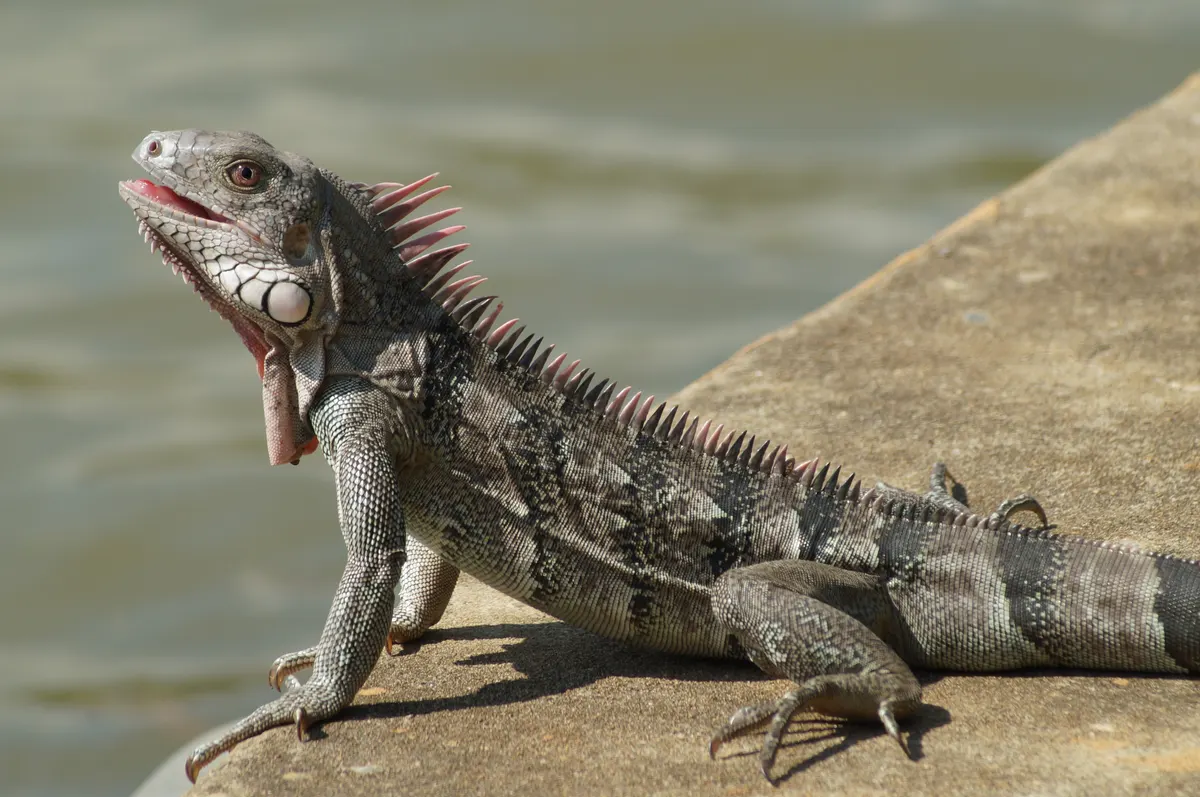
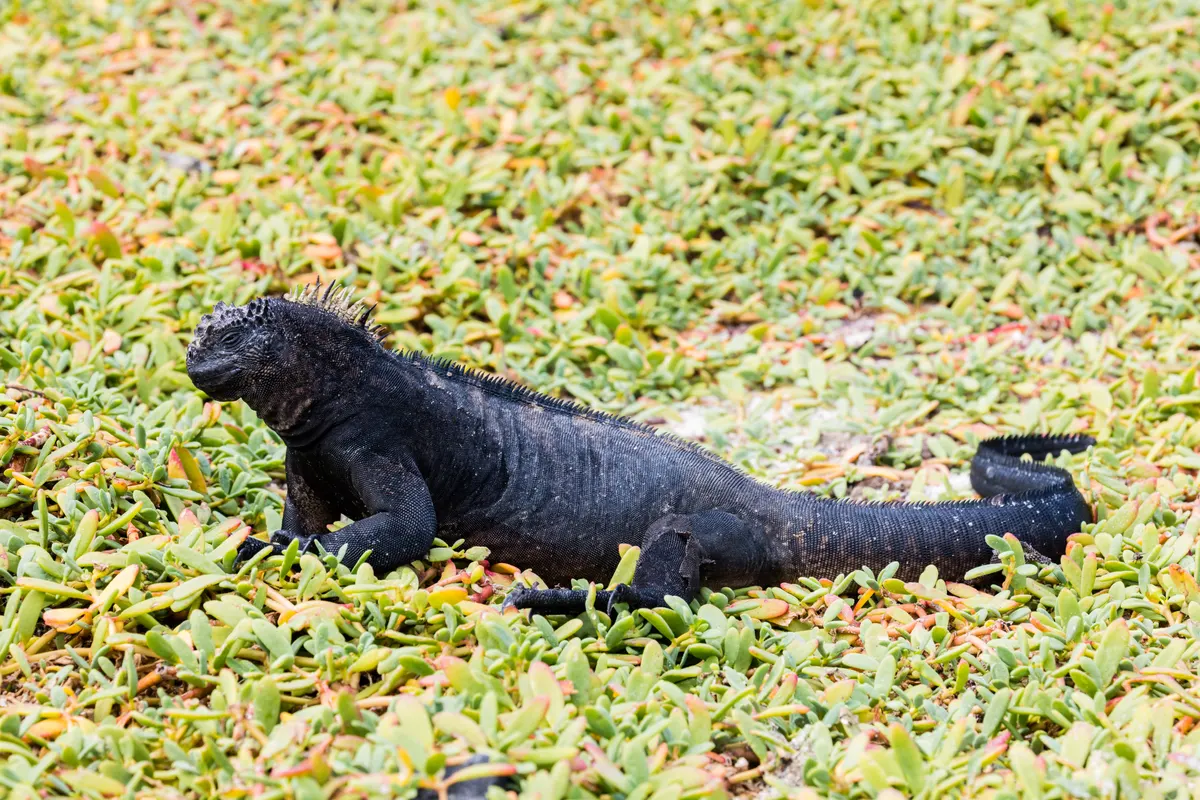
- Marine iguana: a Galápagos lizard that feeds almost exclusively on marine algae. Larger iguanas dive for it at high tide, while smaller ones graze the intertidal zone at low tide. A gland connected to the nostrils gets rid of the salt swallowed with the algae.
Seagrasses are the only flowering plants that live in the sea. In Florida and the Caribbean, turtle grass and manatee grass meadows feed both green sea turtles and manatees.
Many ocean herbivores without a profile here are fish or plankton:
- Reef fish. Parrotfish scrape algae off reef rock with beak-like mouths, and surgeonfish, called the "sheep of the reef", graze the upper parts of algae. Algae compete with corals for space, so this grazing leaves room for corals to grow.
- Krill and other zooplankton. Phytoplankton are microscopic marine algae, and they feed a wide range of sea creatures, including shrimp and snails. Antarctic krill filter phytoplankton from the water, rely heavily on algae growing on sea ice in winter, and are considered the dominant herbivore of the Southern Ocean. The blue whale eats krill, so it is a carnivore.
Not every colorful reef fish eats algae. Some, such as butterflyfish, feed on corals, and the emperor angelfish eats mainly sponges and tunicates.