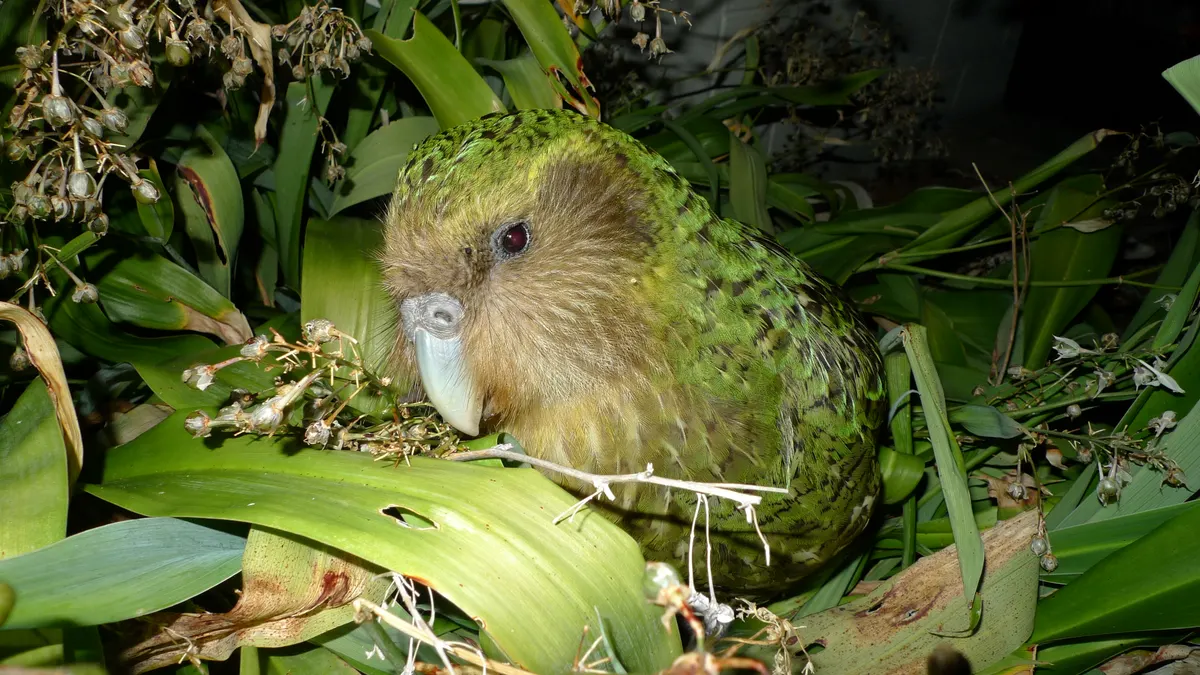
The kakapo is a strict herbivore with a selective, seasonal diet, using its strong curved beak to crush coarse plant matter. It eats leaves, bark, stems, roots, seeds, and fruit — chewing fibrous vegetation to squeeze out the juices and spitting out the dry remains — and depends especially on the nutritious fruit of the rimu tree. It forages methodically on foot at night, following established trackways through a large home range.
Rimu fruit is important, but it is not the kakapo's only food throughout the year. The Department of Conservation's feeding account describes birds feeding on rimu fruit high in trees, supplejack vines and underground tubers. When a favored food is abundant, a bird may feed almost exclusively on it; heavy rimu fruiting also supports breeding.
Feeding signs help explain how a flightless parrot uses tough plants. A kakapo pulls foliage through its bill with its feet, compresses it against the ridged upper bill and extracts nutrients, leaving a crescent-shaped fibrous "chew" behind. In its food web, the kakapo is a plant-eating consumer; introduced cats and stoats can prey on it.
Natural food and recovery feeding are different. The Kakapo Recovery Programme also supplies specially formulated food, usually in spring and summer, to support breeding and chick rearing. That managed supplement should not be confused with a wild diet made only of rimu fruit.