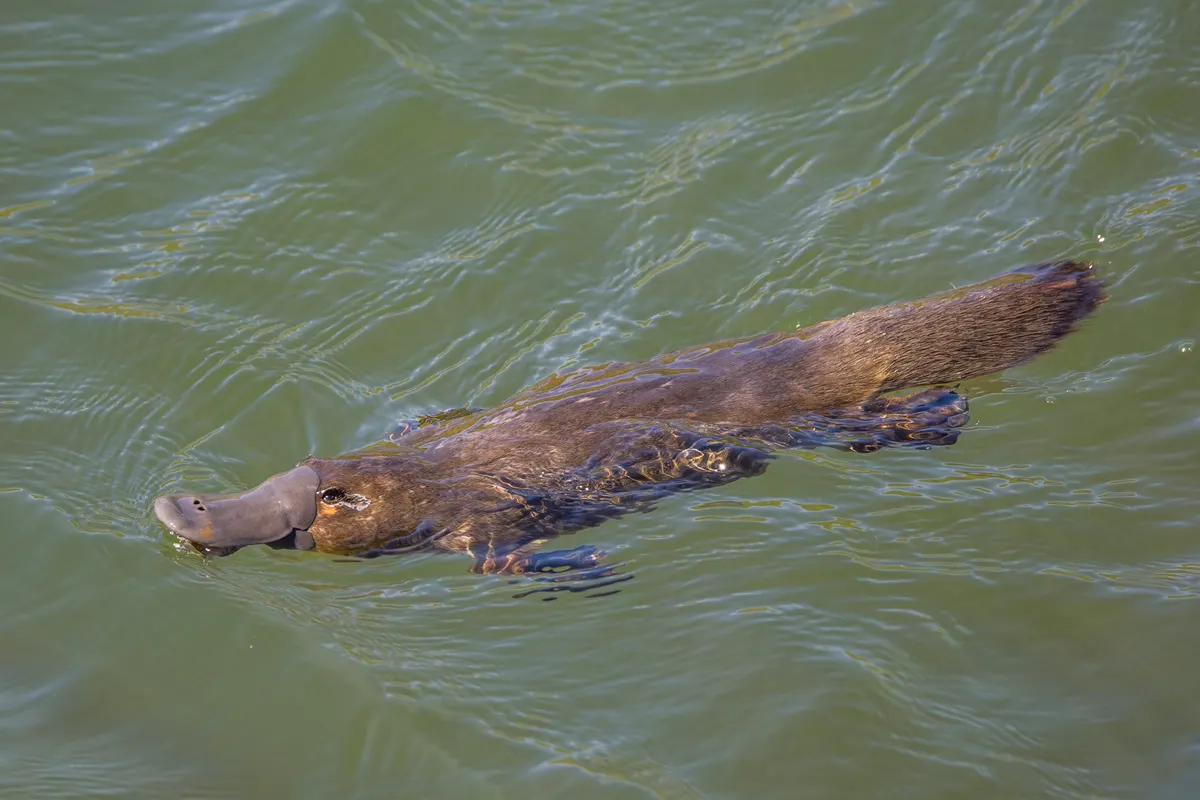
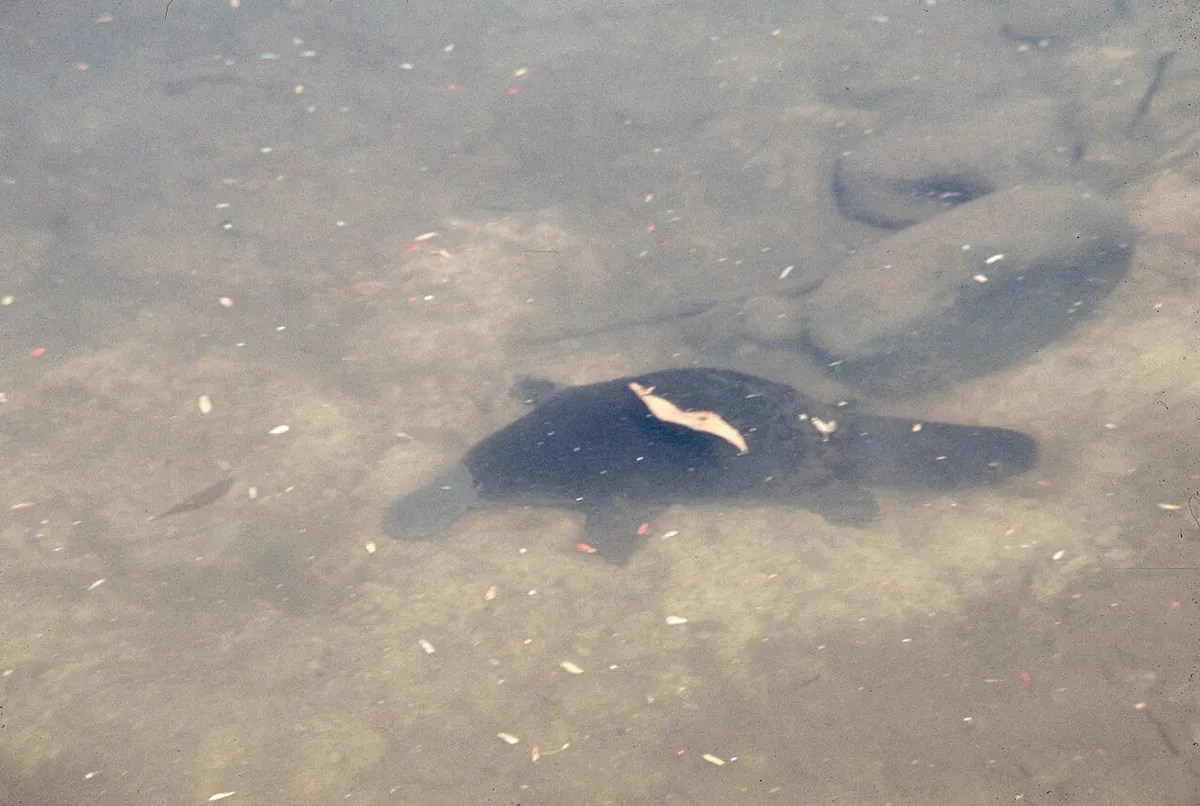
Platypuses do not form pairs: males try to mate with as many females as possible, and the female raises the young alone. Courtship and mating have been recorded from late July in southern Queensland to as late as December in Tasmania. The nesting burrow is most often less than 10 metres (33 ft) long, though it can be longer on rivers that routinely flood in summer. The female blocks the entry tunnel with a series of 2 to 9 compacted soil plugs, which are thought to deter predators and to protect the young from drowning if the water rises.
Gestation averages about 16 days (13 to 23 days recorded in captivity). The female lays 1 to 3 eggs, most often 2, each 16–18 mm (about 0.7 in) long with a papery, parchment-like shell, and incubates them for about 10 days, held between her curled-up tail and her belly. The hatchlings are tiny and very immature; a bump on the end of the snout (the caruncle) and an egg tooth help them break out of the egg. Females have no nipples: milk is secreted from two patches of skin onto the belly fur, and the young feed on it in the burrow for about 3 to 4 months. The young are informally called puggles, a word used since 2003, when Taronga Zoo staff adopted it; biologists often call them nestlings.
Juveniles first enter the water in summer on the mainland and in autumn in Tasmania, at about 85% of adult length, and learn to swim and find food without being taught by their mother. Both sexes mature at about 2 years, although some females do not raise a first litter until they are at least 4, and fewer than half of females breed in an average year. Wild platypuses have been recorded living up to 24 years, and captive animals up to 30.