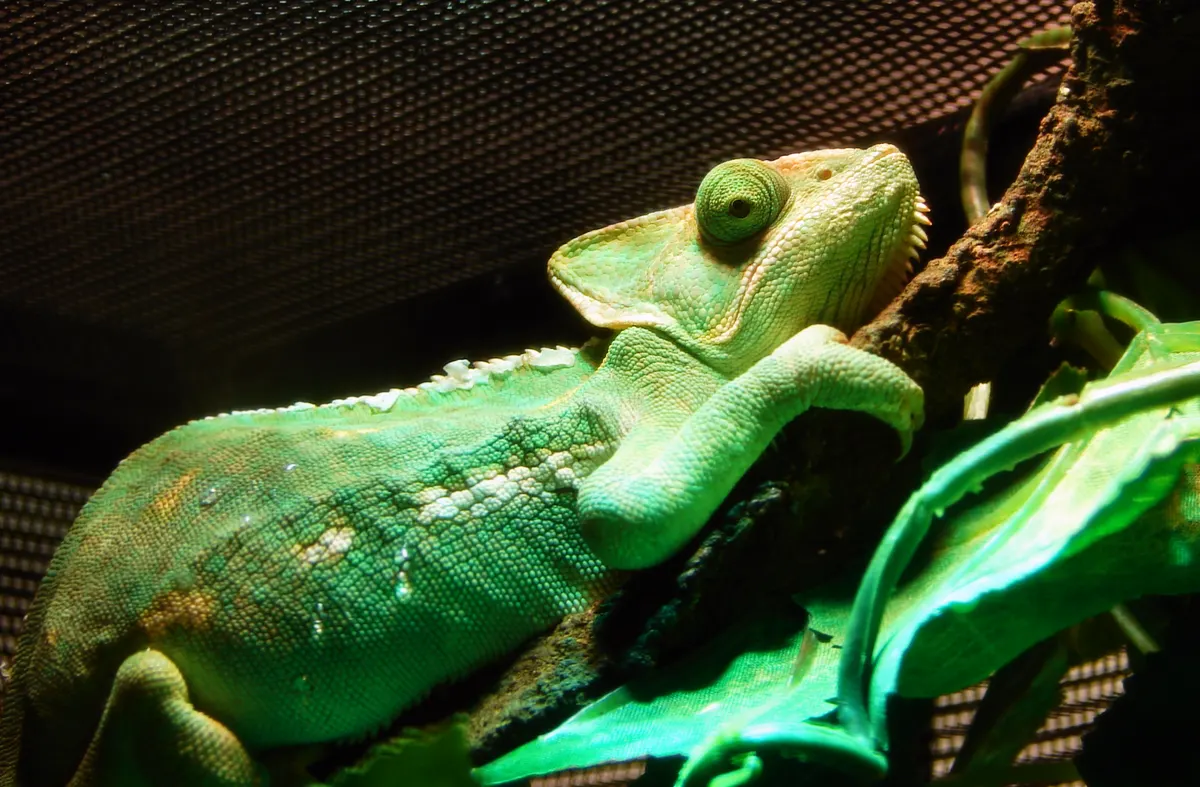
A chameleon is a lizard, which makes it a reptile, not an amphibian. Chameleons make up the family Chamaeleonidae, about 240 species that live mainly in Madagascar and mainland Africa, with a few in southern Spain, the Arabian Peninsula, India and Sri Lanka. They are predators that eat mainly insects, so they count as carnivores, although a few species, including the veiled chameleon, also eat some plant material. As a family they live in habitats from rainforest to desert. The name comes from Greek words meaning "earth lion".
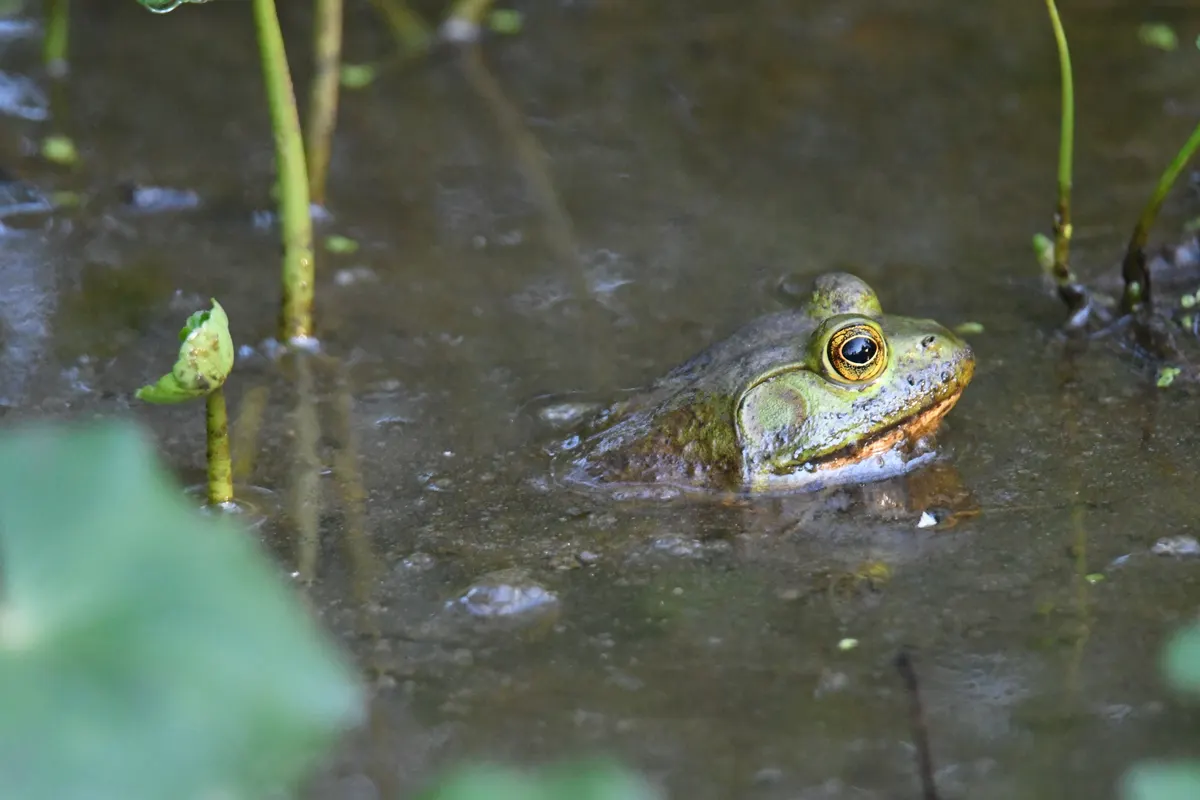
Several features place chameleons with reptiles rather than amphibians. Their skin is covered in scales that keep the body from drying out, most species lay eggs that the female buries in soil on land (a few, such as Jackson's chameleon, give birth to live young), and the young emerge as small versions of the adults with no larval stage. Amphibians such as the red-eyed tree frog and the axolotl have soft, moist skin, and their young are larvae that breathe with gills underwater.
Within the lizards, chameleons are recognised by a set of shared characteristics: eyes that move independently of each other, toes fused into two opposing bundles that grip branches, a prehensile tail in tree-dwelling species, a sticky tongue that can be shot out up to about two body lengths, and skin that changes colour.
This profile covers one species in detail: the veiled chameleon (Chamaeleo calyptratus) of Yemen and southwestern Saudi Arabia, named for the tall helmet-like casque on its head. Adult males measure about 43–61 cm (17–24 in) from snout to tail tip and females about 25–40 cm (10–16 in), roughly half of it tail. Like most chameleons it eats mainly insects, but it is one of the few chameleons that also eat plants, taking leaves and flowers.